The tea pavilion · origins in 1856
A place to
lose track of time.
A sheltered seat among the trees, close to the landscape. The tea pavilion tells a story reaching back to the middle of the nineteenth century.

The present tea pavilion on the estate, rebuilt after the historical original.
1856 Where the story begins
The tea pavilion through the day
Among the flowers.
Beneath the trees.
In fresh spring greenery or warmly lit at dusk, the tea pavilion has a different atmosphere at every hour.


From viewpoint to cherished heritage
Older than
the country house.
A pavilion on the hill
The original tea pavilion was built in 1856. According to Landgoederen in Overijssel, it was commissioned by the Reverend Ter Kuile and built by the carpenter Jan Wansink. The country house did not yet exist.
Natuurmonumenten describes how the hilltop pavilion offered views across fields, woods and ridges. When A.J.H. Blijdenstein bought the estate in 1902, the tea pavilion was already part of the site.
A garden room in the landscape
Tea pavilions belong to the Dutch country estate tradition. The Netherlands Open Air Museum describes them as an extra sitting room outdoors, intended for enjoying the view. From the second half of the eighteenth century, the name 'theekoepel' became established alongside the popularity of tea drinking.
Here too, the attraction lies in the relationship between building and surroundings. The light timber façade, dark columns and broad eaves give the pavilion its own character. Stone steps lead to a small, sheltered space with open views of the greenery.
Moved away and brought back
The original pavilion was later moved to the Boerskotten estate. During the restoration of Het Hakenberg, this historical feature returned as a reconstruction. Landgoederen in Overijssel mentions the restoration plan for 2012–2016 and the carpenter Ben Geerdink.
Today's tea pavilion is therefore a reconstruction of the nineteenth-century original. Its history begins in 1856; the building we cherish today brings that past to life again.
A place to preserve
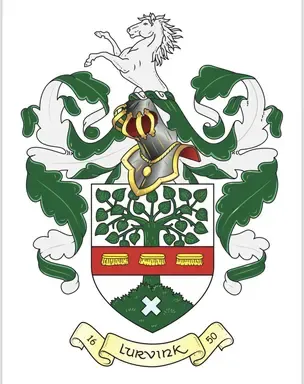
Since 2020, the Lurvink family has continued to care for the estate. The tea pavilion is part of that living heritage: a place where respect for history meets enjoyment of country life.
The story in four moments
1856
The first pavilion
Built for the Reverend Ter Kuile.
1902
A new owner
A.J.H. Blijdenstein buys the estate.
2012–2016
Back on the estate
Rebuilt as part of the restoration plan.
2020–present
Caring for the future
The Lurvink family continues its conservation.
Further reading
The sourcesbehind the story.
The date 1856 is given by both Natuurmonumenten and Landgoederen in Overijssel. The latter also describes the original construction and later reconstruction. Publications differ on the precise year of the move to Boerskotten, so no exact date is given here.
The tea pavilion is in the private park. Visits are by appointment only.